

Risky Bulletin Newsletter
October 26, 2026
Risky Bulletin: While everyone was looking at PHP, another RCE is wrecking what's left of the internet
Written by

News Editor
This newsletter is brought to you by Nebulock. You can subscribe to an audio version of this newsletter as a podcast by searching for "Risky Business" in your podcatcher or subscribing via this RSS feed. You can also add the Risky Business newsletter as a Preferred Source to your Google search results by going here.
About the same time everyone was busy reading about and patching two remote code execution bugs in PHP servers last week (aka PHP2Shell), another major bug got less attention even if it had a similarly broad impact and severity.
The vulnerability itself allows remote code execution attacks against any app, server, or traffic management tool that handles user-supplied data that was compressed in Google's Brotli format.
The format is broadly used and became popular after Google open-sourced it more than a decade ago.
At its core, the vulnerability is a memory corruption bug. It allows attackers that send malcrafted Brotli-encoded data to a server to write malicious code in the server memory outside the bounds where the Brotli data is expected to be processed.
It doesn't require any authentication and because it's in the Brotli code, it also impacts all its implementation libraries.
The blast radius is huge. While PHP2Shell only impacts PHP web servers, Brotli basically impacts everything, across programming languages.
The first project to patch it was Node.js, which is why the bug was initially known as Node2Shell, as a nod to PHP2Shell.
As the Brotli patch went out, it started getting integrated into all the downstream projects and a much larger picture emerged, far beyond the initial Node.js patch.
Patches rolled out for a bunch of Python Brotli integrations, the Bun JavaScript runtime, the Envoy proxy, and the Istio traffic management platform.
Many other projects are expected to confirm impact and also roll out their own set of fixes, which will trigger a deluge of patches all over the DevOps ecosystem in the coming months.
Please be sure you don’t take your eye off the big node.js/brotli vulnerability while php2shell was sucking all the air from the room. https://www.aikido.dev/blog/python-packages-vulnerable-node2shell-brotli-cve-2026-111497
— Scary "Grampus" Jerry 👻 (@jerry.infosec.exchange.ap.brid.gy) October 24, 2026 at 3:31 PM
[image or embed]
Because infosec people have an obsession with branding vulnerabilities and giving them names, this has also created much confusion about this bug. While it initially started out as being called Node2Shell, the vulnerability is now also being referred to as HTTPS2Shell, Brocolli2Shell, and the Brotlipocalypse.
With so many names, it prolly easier at this point to just refer to it via its CVE, which is CVE-2026-111497. While branding security bugs is good in some cases, the attention whoring on this one has gone a little bit too far for most people's taste.
If you want to check your apps and code to see if they process Brotli data, security firm Trail of Bits released a tool last week to audit your code and confirm if it's vulnerable—and then you can start looking for a patch, if it's available. Some detection rules are also available.
Just like PHP2Shell, this bug was also found using AI tools. Node.js credited Khai Tran and Sylvie Mayer, from the OpenAI Codex Security team.
Last week has been truly one for the ages when it came to vulnerability research disclosures. I don't envy any developer and system administrator right about now.
php2shell node2shell pwnescape eMudhra it's genuinely feeling like a cybersecurity apocalypse scenario
— Glen 🐉 (@glenmerlin.me) October 23, 2026 at 7:04 PM
Risky Business Podcasts
The main Risky Business podcast is now on YouTube with video versions of our recent episodes. Below is our latest weekly show with Pat, Adam, and guest co-host Mark El-Khoury at the helm!
Breaches, hacks, and security incidents
ABC wipes staff devices: The Australian Broadcast Corporation wiped "a small number" of staff devices last week. The devices loaded ads from an Israeli company that were used to deliver zero-click spyware. The ABC says it found no signs of a compromise but wiped the devices out of precaution. [ABC]
LiteLLM incident linked to master key leak: The LiteLLM project has leaked a recent supply chain attack to the leak of a master key in May. A threat actor found and used the key to add an infostealer to a LiteLLM version released last week. The master key was for an experimental project named LiteLLM Agent Platform, a tool to host cloud agents that interact with GitHub repositories. [LiteLLM // Microsoft]
Genesys breach: A hacker has gained access to the internal, business systems of AI cloud platform Genesys. The intruders entered via a learning management system (LMS) and a customer relationship management (CRM) platform. The company says it found no evidence that the hackers pivoted to its public customer clouds. [Genesys]
Andromeda breach: Hackers have gained access to customer accounts on the Andromeda cloud AI platform and stolen credentials from accounts. Andromeda says the intrusions were part of a larger, industry-wide attack on AI infrastructure providers. Threat actors compromise accounts, steal AI API keys, and rent access to AI infrastructure on underground forums. [Andromeda]
ENGIE hacked: European energy giant ENGIE is notifying customers of a security breach after hackers breached an internal platform. The incident impacted customers of its gas supply business in France. The hackers allegedly got in via an unnamed CRM platform used by business partners to sell energy contracts. [TheSiteOueb]
Initia hacked for $2.7m: Threat actors used an infinite mint exploit to create and steal $2.7 million worth of tokens from the Initia crypto project. [Crypto Ninjas // Initia]
General tech and privacy
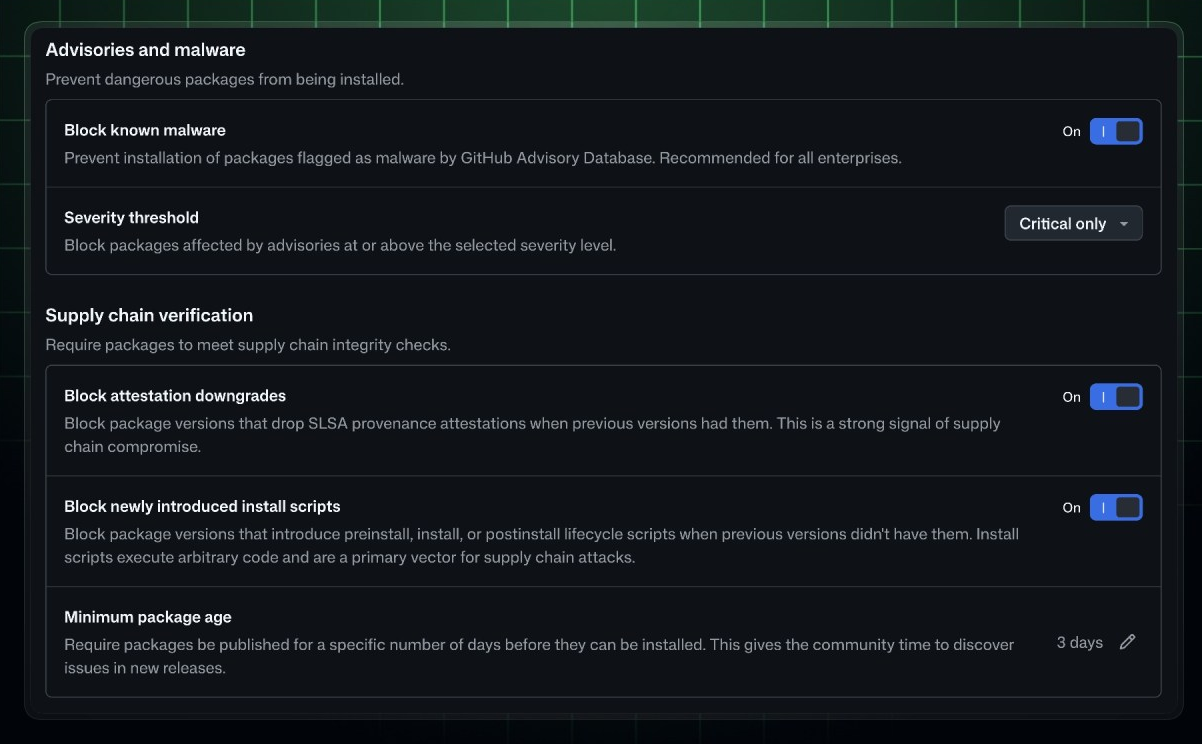
GitHub package firewall: GitHub's new package firewall feature is now in public preview. Its main purpose is to help package maintainers fight supply chain malware. [GitHub]
Government, politics, and policy
Australia sanctions two DPRK firms: The Australian government has sanctioned two North Korean companies and two individuals involved in remote IT worker schemes. Sanctions were levied on the Korea Mangyongdae Computer Technology Company and Chinyong Information Technology Cooperation Company, and Sim Hyon Sop and Yu Py Ung. All are also sanctioned by the US since 2023. [Australia's Minister for Foreign Affairs]
Sweden blocks ChatGPT and Claude for govt workers: Sweden has banned government workers from using the ChatGPT and Claude AI assistants. The government wants workers to only use approved AI assistants like Microsoft Copilot. The ban entered into effect on Monday. [Sverige Radio]
Greece bans social media for under 15s: The Greek Parliament has passed a bill to ban kids under the age of 15 from social media. The new law will enter into effect next year. Greece will become the first EU country to impose such a ban after a similar law in France was struck down by its top court. [Yahoo News //Greek Parliament]
Russia extends migrant tracking app for entire country: The Russian government has extended a pilot program for tracking foreign migrants across Moscow to the entire country. All foreign nationals entering Russia will have to install a mobile app on their phones to track their location. The Kremlin made the app mandatory after the Crocus City Hall terrorist attack in 2024. [Interfax]
Gibraltar govt sites go down: Gibraltar's official government sites went down last week after GoDaddy revoked their TLS certificates due to some technical errors on its side. [GBC News] [h/t Tracy Maleeff]
FCC bans two devices: The US Federal Communications Commission has banned the sale of two devices in the US for containing "foreign surveillance chips." The devices are a dashboard camera and a wireless video transmitter. The FCC did not name the two products. Both use chips from HiSilicon, a Huawei subsidiary. The US administration has blacklisted Huawei and designated the company a threat to US national security. [FCC]
Another CISA official leaves: CISA Chief of Vulnerability Response Lindsey Cerkovnik is leaving the agency after a six-year tenure. Under her tenure, CISA rolled out the highly successful KEV program. CISA has not announced a replacement. [NextGov // Lindsey Cerkovnik on LinkedIn]
Pentagon orders 30 unis to sever Chinese ties: The Pentagon has ordered 30 state and private universities to sever research ties with Chinese counterparts. US officials cited the threat of research theft through the joint collaborations. Institutions that fail to comply face losing their federal research funding. [Air Force Times]
Sponsor section
In this Risky Business sponsor interview, James Wilson chats to Nebulock’s Head of Detection Strategy Alex Hurtado about the company’s threat hunting evaluation framework, GATES.
Arrests, cybercrime, and threat intel
Dutch police arrest NFC relay suspects: Dutch police have arrested two suspects involved in a mobile phishing and NFC relay campaign. The suspects used AI tools to create automated voice messages posing as banks and trick users into scanning their cards and entering PINs. The two collected NFC transaction data and withdrew money from the victim's accounts at ATMs—in a scheme called NFC relay. [Dutch Police]
Singapore warns of social media ads: Singapore's Police Force said hackers stole more than 1 million SGP ($780,000 USD) from locals after they used malicious social media ads to infect them with malware. [Singapore Police Force]
Miasma worm returns: A new version of the Miasma worm has been spotted in 15 npm packages last week. No big outbreak, though. [SafeDep]
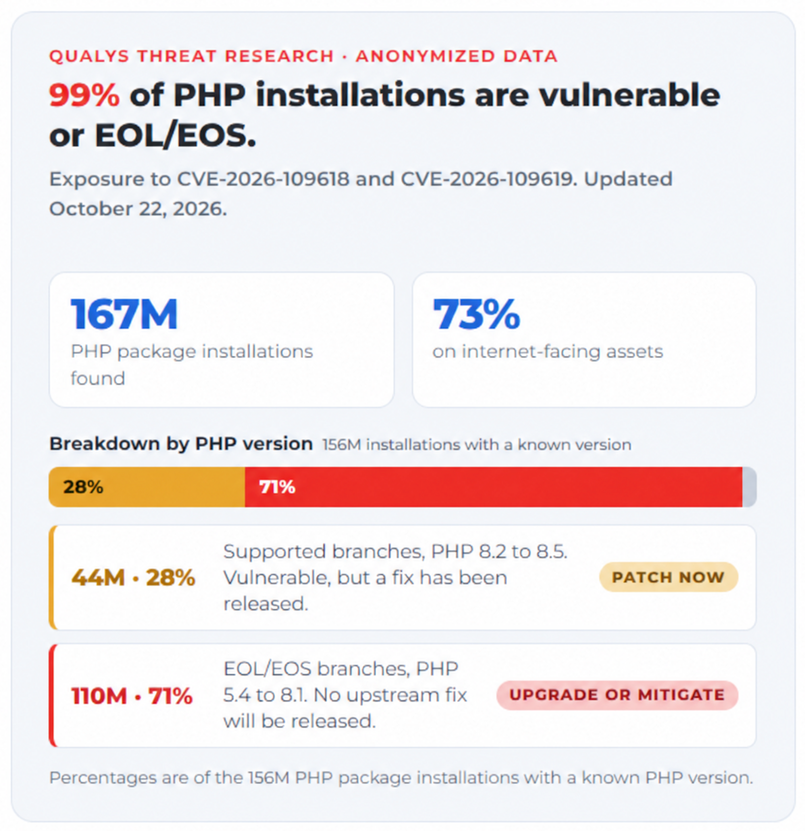
PHP2Shell exposure: According to scans from security firms Qualys and Ox Security, more than 99% of all PHP servers vulnerable to PHP2Shell are still unpatched. Overall, 73% of all PHP assets on the internet are vulnerable to attacks. [Qualys // Ox Security]
PHP2Shell exploitation: While there are reports of active PHP2Shell exploitation going around, none have provided specific details. Arctic Wolf has linked some of these attacks to a threat actor, namely the Potassium botnet, a Mirai-derived botnet family first identified earlier this year. [Arctic Wolf]
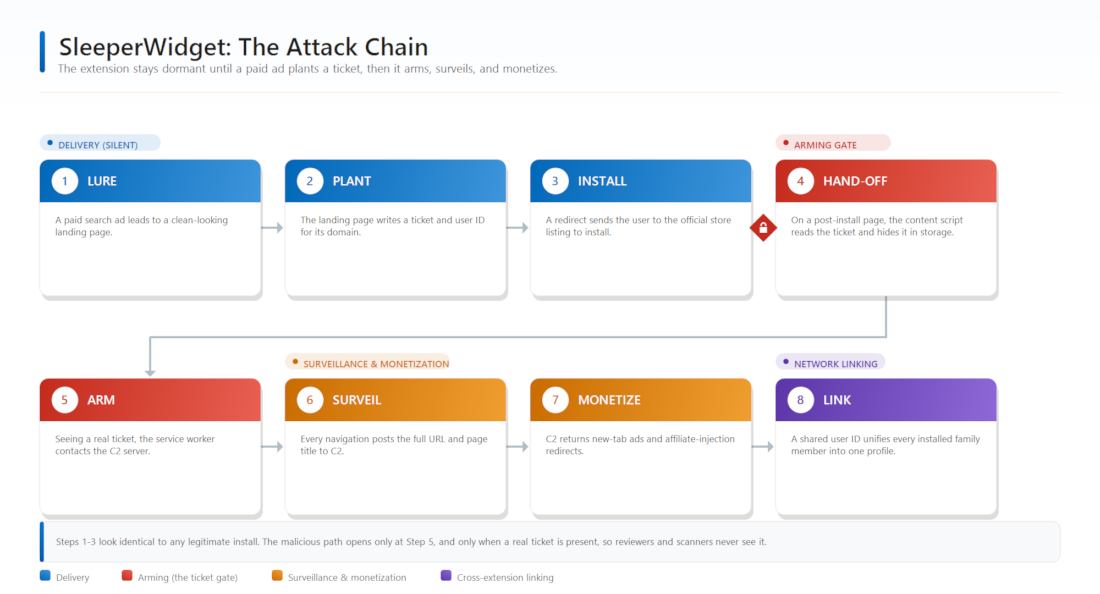
SleeperWidget campaign: The Microsoft security team has found a cluster of malicious extensions that launch their malicious behavior when the user views a malicious ad. The ad code will trigger browsing-data collection, ad injection, and shopping-link modification. Microsoft has spotted at least 250 extensions across the Microsoft Edge Add-ons, Chrome Web Store, and Mozilla Add-ons portals. [Microsoft Browser Vulnerability Research]
Malware technical reports
Astro C2: ThreatMon looks at another agent-powered, Rust-based command and control framework. [ThreatMon]
uCreator: Security researcher Ovi Liber published a breakdown of uCreator, a commercial Android surveillance platform designed to target crypto-wallet and IM apps typically popular across the Chinese space. [Ovi Liber]
New Magento malware: Sansec researchers have found a new malware family loaded on almost 1,000 online stores. [Sansec]
Overlord RAT: WatchGuard's security team looks at a malware campaign delivering the Overlord RAT, a rather new remote access trojan that can target both Windows and macOS. [WatchGuard // Iru]
Insomnia RAT: Stairwell has published a technical analysis of Insomnia, a remote access trojan with Node.js and Python versions, capable of running on both Windows and macOS. [Stairwell]
Aokigahara: Check Point researchers have spotted a new infostealer being sold on underground markets. This one's named Aokigahara, and is a rebrand of the older Kamidere or Stygian. This new version adds support for stealing data from AI-related services and tools. [Check Point]
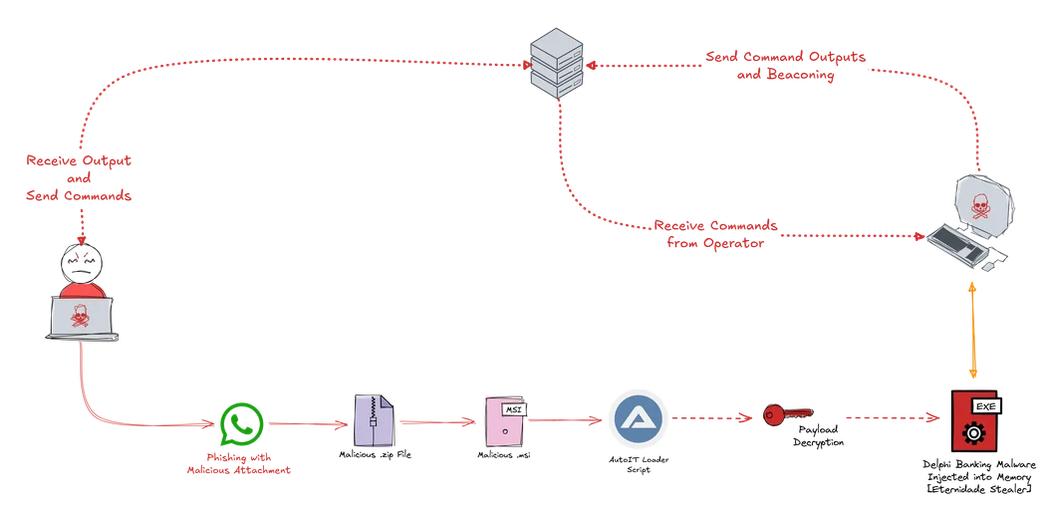
Eternidade Stealer: Malware researcher 0x0d4y looks at Eternidade, a very niche infostealer used primarily in WhatsApp phishing attacks targeting Brazil. [0x0d4y]
Sponsor section
Agentic AI platform Nebulock pitches its product in one of our recent Snakeoilers episodes.
APTs, cyber-espionage, and info-ops
UAC-0246: A suspected Russian threat actor is targeting users of a Ukrainian email provider with tax-related rules. [SSSCIP]
Storm-0940: Expel looks at Storm-0940 campaigns, where this Chinese state-linked threat actor has deployed Artex AI agents to hack into targets across the world. This is the same group that hacked ConnectWise's cloud backup app. Expel says it also saw the same actor abuse a company's Okta self-service registration, with no ConnectWise app involved, as a way to persist in a network. [Expel]
DPRK goes after PHP2Shell: Indian security firm CyFirma has spotted infrastructure typically associated with DPRK threat actors trying to exploit the PHP2Shell vulnerabilities. [CyFirma]
Vulnerabilities, security research, and bug bounty
Security updates: ABB, AWS, Brotli, Git, HPE, Juniper, Kubernetes, Laravel, Microsoft Exchange, Ruby, Supermicro, SUSE, Tails.
OpenAI vulnerabilities: AI testing services METR and Redwood Research found new vulnerabilities in OpenAI's internal systems. One of the bugs could have been exploited by agents to hide from OpenAI's agent monitoring controls. Both companies tested OpenAI's systems from inside its network, with OpenAI's approval. [METR // Redwood Research]
Third PHP RCE incoming: The PHP security team is preparing patches for a third remote code execution bug. Developers sent out a security notice on Friday. Mitigations already applied for two remote code execution bugs last week are also valid for the upcoming third. [PHP]
GhostShares vulnerability: Meta has disabled the ability to share private Muse AI conversations after reports of data leaks. The feature created public URLs for user chats that anyone could discover online and scrape for sensitive information. Both ChatGPT and Grok had similar exposures last year. [Claroc // ArsTechnica]
Web Hole technique: Air Security says AI agents are vulnerable to web-based attacks because they, by default, look at top search results to pull their replies. The company says it found several expired domains in top search results that can be bought and used to host malicious prompts and content to target AI chatbots. [Air Security]
ChainGuard explains disclosure drama: ChainGuard CEO Dan Lorenc explained in a LinkedIn post the circumstances of how his company ended up breaking last week's PHP2Shell embargo. [Dan Lorenc on LinkedIn]
Qwen3 generates insecure code for Western users: Chinese AI model Qwen3-Coder generates insecure code when used by Western users. According to AI security firm Hirundo, the model wrote much safer code when prompts claimed the code was to be used for a Chinese product or customer. A similar report from CrowdStrike last year reached the same conclusion. [Hirundo // CrowdStrike]
Tailscale security audit: A security audit of the Tailscale app has found 11 security issues, with some being easily exploitable to take over cloud servers. All issues are still unpatched. [Tailworm]
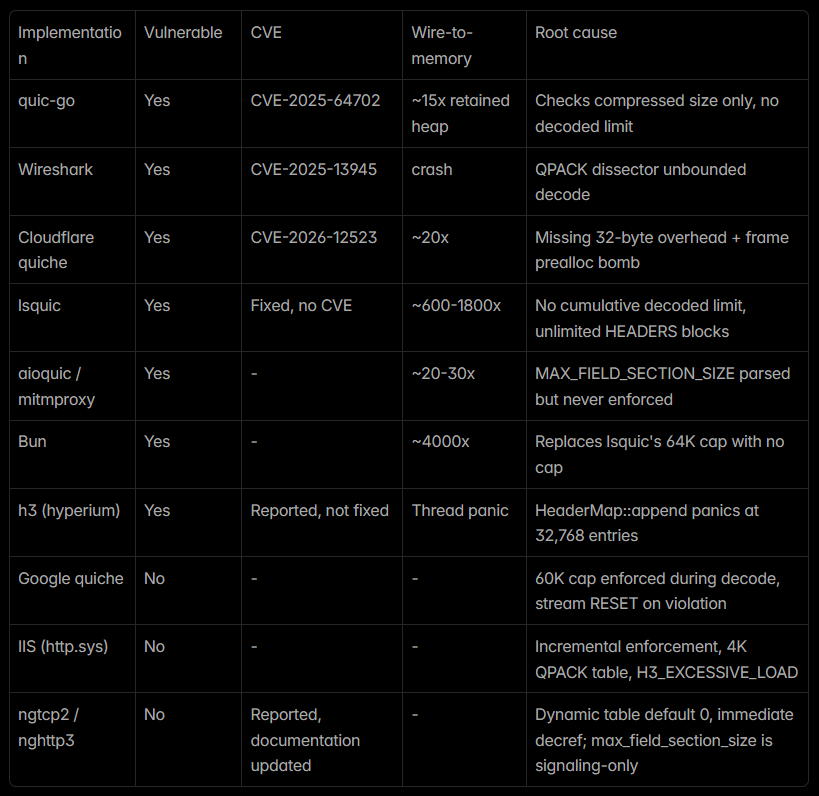
HTTP/3 QPACK is a DDoS attack vector: Threat actors can crash modern HTTP/3 web servers by exploiting the QPACK compression format. Malcrafted QPACK packets can be expanded by hundreds and even thousands of times in the server's memory until it exhausts all RAM. Several HTTP/3 servers are vulnerable, but the Bun framework's implementation is the most vulnerable, with a packet amplification factor of almost 4,000. [FoxIO]
Infosec industry
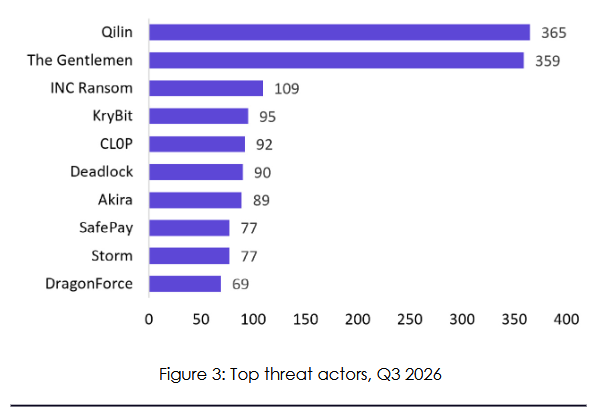
Threat/trend reports: Barracuda, IANS, NAIC, NCC Group, ThreatMon, Trend Micro, and UltraViolet have recently published reports and summaries covering various emerging threats and industry trends.
Acquisition news: Cloud security firm DataDog has reportedly submitted a bid to buy Israeli cloud cybersecurity startup Upwind for a whopping $4 billion. [CTech]
Cyber insurance market triples: According to a new report from the National Association of Insurance Commissioners, the cyber insurance market has tripled in size since 2020, growing from $2.75 billion to $7.46 billion. [NAIC press release // Report, PDF]
New tool—PHP2Shell checkers: Corelight, OpenAI, and Searchlight have released tools to scan PHP systems and see if they're vulnerable to PHP2Shell attacks.
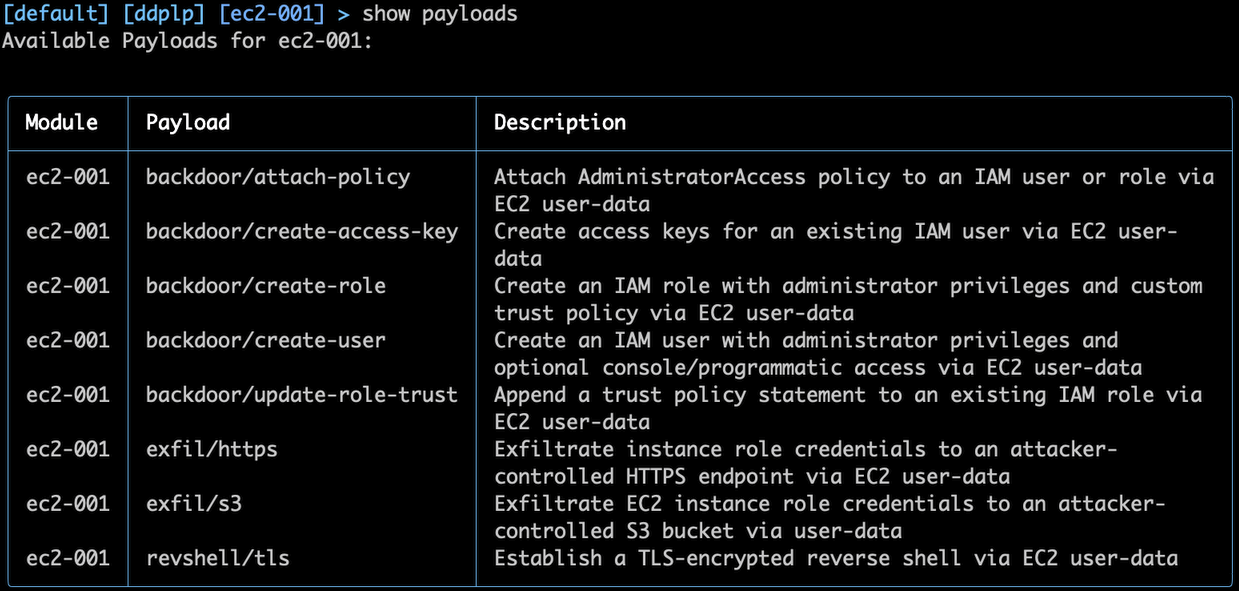
New tool—Pathrunner: DataDog has also released Pathrunner, an AWS privilege escalation exploitation framework.
Risky Business podcasts
In this episode of Risky Business Features, James Wilson looks at the string of recent AI benchmark cheating escapades and how they’ve reshaped his thinking about LLMs and vulnerability research.