

Risky Bulletin Newsletter
October 12, 2026
Risky Bulletin: ShinyHunters suspects arrested in US and Jordan
Written by

News Editor
This newsletter is brought to you by cloud security firm Prowler. You can subscribe to an audio version of this newsletter as a podcast by searching for "Risky Business" in your podcatcher or subscribing via this RSS feed. You can also add the Risky Business newsletter as a Preferred Source to your Google search results by going here.
Breaches, hacks, and security incidents
ccTLD registry hijacks: A threat actor has hijacked the country-code top-level domain spaces for American Samoa (.as), Ghana (.gh), and Sierra Leone (.sl). The attackers modified DNS records to pass ownership checks and obtain HTTPS certificates for specific domains. Google says the threat actor targeted some of its services, as well as other organizations. [Google]
FBI drops Accenture following hack: The FBI dropped Accenture as a contractor last week after it failed to secure systems breached by the ShinyHunters group. According to Reuters, Accenture failed to install security patches for the Oracle PeopleSoft platform breached by the group last month. ShinyHunters members stole the personal and business data of almost all FBI special agents. [Reuters]
OpenAI agents tried to hack Wikimedia: OpenAI agents edited Wikipedia and attempted to hack a public Wikimedia note-taking tool. The Wikimedia Foundation says the edits never went live and it also stopped the attack against its Etherpad service. The organization says OpenAI agents also scraped its API, causing a huge spike in its traffic. [Wikimedia Foundation]
Anthropic cuts internet access for AI cyber tests: Anthropic has disabled internet access for its AI testing environments after new incidents where agents went rogue online last week. Claude agents filed false homicide tips to a Philadelphia police department and also filed 20 US visa applications. Anthropic says both incidents had minimal real-world impact. [Anthropic // The Hill // The Business Standard]
OpenAI hacked another Aussie site: OpenAI agents hacked a second Australian site, this time a New South Wales state government department, where they accessed historical non-public data on bushfires. [The Guardian]
Double Counter breach: Discord server protection service Double Counter has disclosed a security breach tied to an intrusion in its Metabase database. [Double Counter]
Italian MoFA cyberattacks: Italy's Ministry of Foreign Affairs says hackers targeted its website and server infrastructures with cyberattacks last week, causing some disruptions. [Italy MoFA]
Breach exposes Danish citizens' data: Hackers have stolen the data of 8.8 million Danish citizens from the country's central population register. The data covers living and dead citizens. The stolen data includes names, addresses, and social security numbers. The hacker claims they breached the database via an account that used the "123456" password. [Denmark Ministry of Research, Education and Digitalisation // Politiken // Euronews]
South Korea probes AI bank hacks: A suspected Chinese threat actor used AI tooling to break into South Korean banks and financial companies. The attackers used ARTEX and Claude agents for their attacks. CrowdStrike confirmed successful data exfiltration. South Korean authorities are investigating the intrusions. [Korea JoonAng Daily // CrowdStrike]
South Korean mega-churches hacked: Hackers have compromised and stolen congregant data from at least two South Korean mega-churches, according to data found on the attackers' servers. [Oasis Security]
Another Nikkei breach: Japanese media giant Nikkei has disclosed another breach after hackers accessed its Google Workspace in July. [Nikkei]
IDC Frontier Cloud ransomware incident: A ransomware attack has disrupted the server infrastructure of IDC Frontier Cloud, a cloud service provider servicing the Japanese government. [IDC]
Osaka university suspends classes: The Osaka Metropolitan University has canceled classes last week due to a ransomware attack that hit its IT network. [The Record]
Oracle breach impacts 20m: A year after it happened, Oracle has finally come clean and said that a breach of its Oracle Health's legacy Cerner systems impacted a total of 20 million patients. Better late than never, I guess. [SecurityWeek]
iRhythm data breach: Heart monitoring device manufacturer iRhythm says hackers stole the data of more than 360,000 patients in a breach this June. [The HIPAA Journal]
Domino's Pizza cred-stuffing attack: Domino's Pizza is contacting users and urging them to change their password after suffering a credential-stuffing attack that compromised their accounts this month. [Malwarebytes]
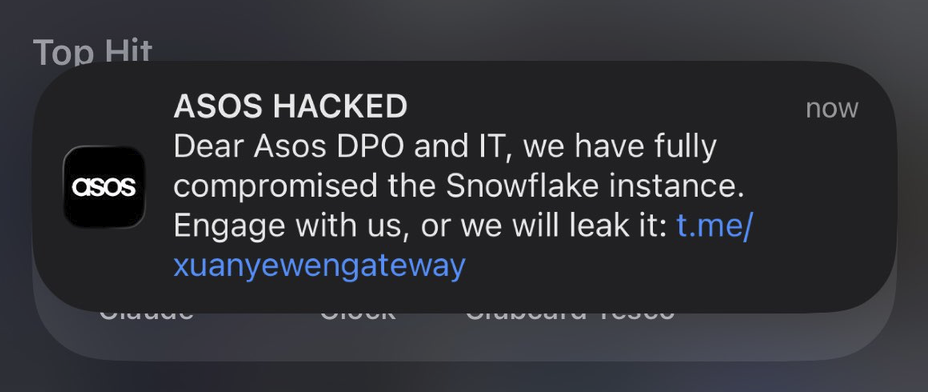
UK retailer ASOS hacked: Hackers have breached UK clothes retailer ASOS and sent a mass notification to all the company's customers via its mobile app to announce the hack. [Sky News]
General tech and privacy
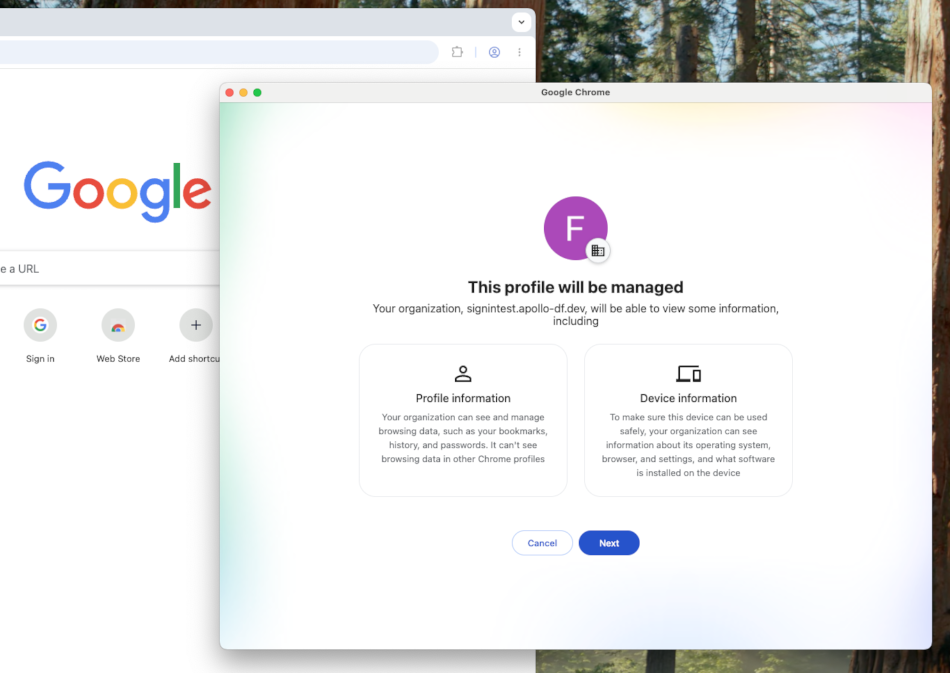
Chrome 155: Google has released version 155 of its Chrome browser. See here for security patches and webdev-related changes. The biggest changes in this release are support for JPEG XL (.jxl) images, new crypto algorithms, and a new profile creation process.
Apple prepares ad blocks: Apple is making behind-the-scenes changes to Safari and appears to be implementing a system to block advertising companies from collecting data on its users. It's still unclear what this is. It may be a simple ad blocker or a way for Apple to take more control (and money) of the ads shown on its devices from its gatekeeping role. [AdExchanger]
Yandex goes down after drone strikes: Almost 80 Yandex cloud services went down on Sunday after Ukrainian drones struck a major data center in the city of Vladimir, near Moscow. The attack was the third strike on Yandex data centers over the past four days. Cloudflare reported a drop of 50% in automated bot traffic out of Russia following the recent strike. Ukraine's attacks come after Russia also hit data centers in Ukraine this month. [CNBC // Kyiv Independent]
RESEARCHERS HEADS UP! Interesting discussion on Reddit: A commenter claims that Cloudflare Data Explorer showed Russian bot traffic dropping to 49% after the Yandex strike. Other commenters discuss a possible reduction in activity on X and political subreddits. https://t.co/IzUI7n46Yv
— James F. Love IV (@JamesFLoveIV) October 10, 2026
🎉 80 different cloud services operated by Yandex are currently not available.
— Сонечко Флі 🐶 (@sonechkoflea.bsky.social) October 11, 2026 at 10:28 AM
[image or embed]
We’ve been talking about this for years. None of these far-right movements are organic.
— Angry (@angrystaffer.bsky.social) October 11, 2026 at 9:38 PM
[image or embed]
Meta refuses to remove child abuse ads: After it didn't bat an eye earlier this summer when it ran ads with AI-generated CSAM imagery, Meta is now running AI-generated ads depicing child physical abuse and has refused to take them down even after user reports. This included ads showing kids being beaten, burned, dragged by their hair, locked in cages, and more. [Futurism]
arXiv rate-limits authors: Research paper hosting service arXiv has rate-limited authors to only two papers per month following a flood of AI-written work, with 40,363 submissions in September alone. [arXiv]
Android enclave for on-device AI: Google has added a special enclave to the Android mobile operating system for running on-device AI workloads in a secure sandbox. [Google]
Google cracks down on AI news: Google has updated its SEO guidelines and will downrank websites that publish news and articles under fake AI-generated journalist profiles. Google updated its rules after real reporters uncovered a massive operation run under Brown Brothers Media that was buying real news sites and turning them into AI content mills. The operation ran hundreds of sites and got more than 50 million page views each month. [Futurism]
OpenAI fires three employees: OpenAI has fired three employees for allegedly sharing confidential information with a third-party AI-safety organization. In an open letter, the employees disputed the claims. [WSJ // Employees open letter, PDF]
OpenAI fired me last week, along with two of my safety colleagues. I was given one reason: that I accessed an executive's email. I want to say this plainly, because too many of OpenAI’s history is smoke and mirrors when people disappear:
— Jasmine Wang (@j_asminewang) October 8, 2026
AI causes crypto panic: Crypto bros are in a panic that advances in AI mathematics research may crack blockchain cryptography within months, long before quantum computers arrive on the scene. [CoinTelegraph // Shtetl-Optimized]
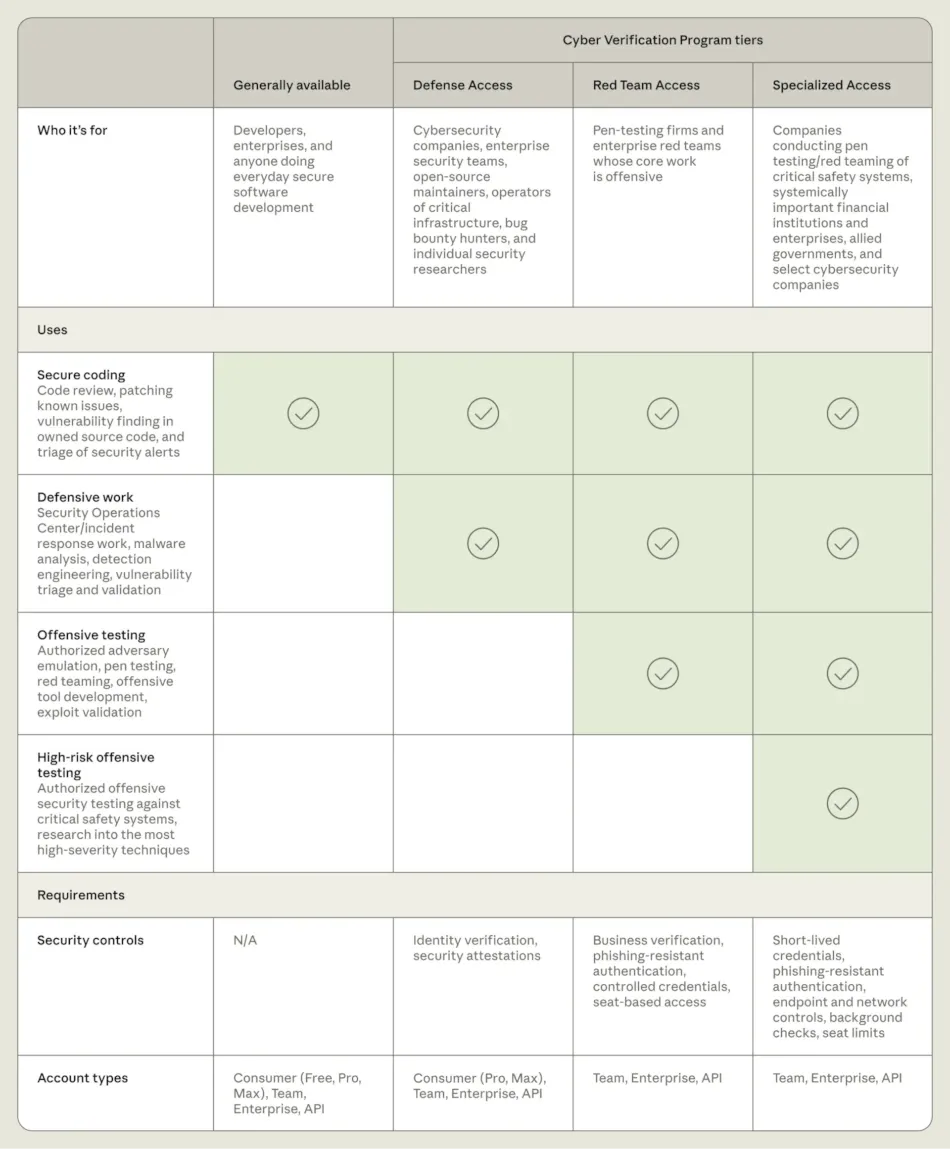
Anthropic expands CVP access: AI company Anthropic has expanded access to a program that grants security researchers access to its most powerful AI models. The company has introduced three new tiers to the Cyber Verification Program. The tiers are configured depending on the nature of the work, such as cyber defense, red team operations, and teams working with critical systems. [Anthropic]
Government, politics, and policy
NSA accelerates PQC timeline: NSA is accelerating its PQC timeline following recent advancements in quantum computing. All of the agency's new commercial systems must be PQC hardened by the start of next year. All legacy systems that don't support PQC will have to be phased out by 2030. [NSA]
New US AI czar: The White House has named Jay Clayton the country's new AI czar, the leader of the new Super Intelligence Force. [NPR]
US builds anti-ICE surveillance database: Palantir has built a database for DHS of anti-ICE protesters and observers, complete with photos, names, and other personal details. [WIRED]
US OAGs sue TP-Link: Four US Attorneys General have sued TP-Link for misleading customers on its routers' security and failing to disclose its ties to the Chinese government. The lawsuits have been filed by the Attorneys General of Florida, Montana, Iowa, and Nebraska. TP-Link said the lawsuits have been built on "false premises" and are "baseless." [Nebraska OAG // Iowa OAG // TP-Link // ArsTechnica]
Pentagon cyber bonuses: The US has approved bonuses of up to $2,500 for cyber personnel who make "exceptional contributions" to Pentagon cyber operations. [DefenseScoop]
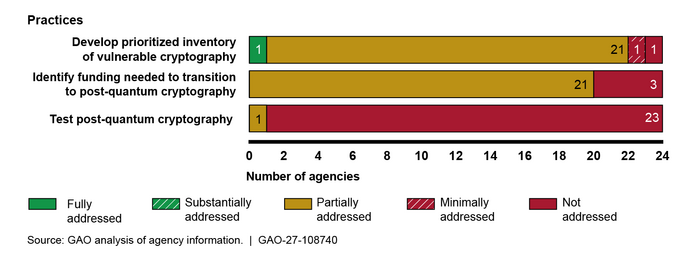
US lags behind in PQC rollout: US government agencies are lagging behind in adopting post-quantum cryptography, a set of encryption algorithms designed to protect against attacks from powerful quantum computers. Only one of 24 major federal agencies has completed a first step of inventorying its assets. No agency has even reached the second and third phases of allocating funding and testing new PQC algorithms. GAO cited the lack of expertise as a main reason for the delays. [GAO // CybersecurityDive]
US pressures countries to pull out of disinfo conference: Government agencies from the EU, Canada, and Lithuania pulled out of an international conference on disinformation after US pressure. The Disinfo 2026 conference took place last week and hosted two talks on US disinformation campaigns. The first talk covered US-based disinformation campaigns against the EU while the second covered the US sanctions and travel bans against EU officials involved in anti-disinformation work. [Politico Europe]
This might have been the sort of sessions that resulted in Canada and Lithuania pulling out of #Disinfo2026 at the last minute, question is, whether it's from direct US pressure. I think we all deserve an answer, is US foreign interference the acceptable face of FIMI now?
— Eliot Higgins (@eliothiggins.bsky.social) October 7, 2026 at 12:48 PM
[image or embed]
Romania confirms Oxygen use: Romania's national defense ministry has confirmed the use of tools from Oxygen Forensics, a company with hidden Russian ownership. [PressHub]
EU looks at Chinese AI models: After being cucked by American AI companies for months and having its access limited to their cyber models, the EU's cybersecurity agency ENISA is testing Chinese open-source AI models. [Politico Europe]
UK sanctions Cryptomus: The UK has imposed sanctions on Cryptomus, a Canadian payment processor as part of a new sanctions package against Russia's war efforts. A Brian Krebs 2024 investigation found that Cryptomus acted as a "payment processor for dozens of Russian cryptocurrency exchanges and websites hawking cybercrime services." The platform has since rebranded as Heleket and now goes as Mirocard. [UK government // TRM Labs // Chainalysis // Synaptic Systems // KrebsOnSecurity]
Brazil accuses Meta of election interference: Brazil's President Lula da Silva has accused Meta of election interference. Lula's campaign claims his social media content and accounts were restricted or hidden on Facebook, WhatsApp, and Instagram ahead of last week's presidential election. Brazil's electoral court has given Meta two days to respond. Brazilian media reported ahead of the election that Meta blocked Lulla's campaign from running political ads while also allowing paid ads calling for a military coup. [FirstPost]
Sponsor section
In this Risky Business sponsor interview, James Wilson chats with Prowler’s founder and CEO Toni de la Fuente about how AI now allows pretty much anyone to vibe-code “killer apps”. These custom apps are often internal for organisations and hosted on the cloud.
Arrests, cybercrime, and threat intel
ShinyHunters member detained in Pennsylvania: The FBI has arrested a suspected associate of the ShinyHunters hacking group. The individual has been identified as Edward Dubrovsky, a Canadian national and cybersecurity expert. Dubrovsky was arrested in Pennsylvania last week. FBI Director Kash Patel claims he was connected to the recent hack of the FBI's job portal last month. [NYT // Kash Patel // Ed Dubrovsky on LinkedIn]
Another ShinyHunters member detained in Jordan: Jordanian authorities have detained a suspected member of the ShinyHunters hacking group. Saif al-Din Khader is allegedly a ShinyHunters member known online as "Rey." According to Reuters, Khader is allegedly cooperating with the FBI to track other members. [Reuters]
Qilin member arrested in Japan: Japanese police have arrested a Russian national believed to be a key member of the Qilin ransomware. The man was extradited to Germany to face charges in a case for an attack on a German company. The Qilin group is today's most active ransomware operation. [The Japan Times]
Ploutus dev arrested: The FBI has arrested the alleged developer of the Ploutus ATM jackpotting malware. Anibal Alexander Canelon Aguirre was arraigned in a New York court at the start of October after being on the FBI Most Wanted list for years. The Ploutus malware can be loaded on ATMs and force the device to eject all its cash. [DOJ]

Security expert charged for ransomware remediation fraud: The US Department of Justice has charged the owner of cybersecurity firm MonsterCloud with fraud. Zohar Pinhasi allegedly charged customers to remediate ransomware attacks without paying the hackers. The DOJ says Pinhasi secretly went behind its customers' backs and paid hackers anyway. Pinhasi's firm allegedly paid ransomware groups $8 million while charging customers $19 million. [DOJ]
Rybar founder detained in Montenegro: Montenegro police have arrested the founder of Rybar, a pro-Kremlin Russian military blog and disinformation group. Mikhail Zvinchuk was arrested on Friday together with his wife and three other Russian nationals. He was detained, questioned, and expelled from the country. According to local media, the five were filming a documentary to undermine Montenegro's EU integration process as part of a Russian influence operation. Before Zvinchuk was released, Russian authorities threatened to arrest American and European "idiots" in retaliation and exchange for Zvinchuk. [YAC News // Vijesti // Newsweek]
Shortly before his detention in Montenegro, Russian propagandist Mikhail Zvinchuk, head of the Rybar network, was publicly bragging about entering the country despite sanctions and a travel ban.
— 🦋Special Kherson Cat🐈🇺🇦 (@specialkhersoncat.bsky.social) October 9, 2026 at 12:49 PM
[image or embed]
Uranium Finance hacker found guilty: A US court has found Jonathan Spalleta guilty of hacking the Uranium Finance cryptocurrency platform and stealing $53 million across two hacks in April 2021. [DOJ]
YMCO leader pleads guilty: A dual Russian-Ukrainian national has pleaded guilty to running the Your Mule Cashout (YMCO) money-laundering service. Oleg Korniev recruited more than 15,000 money mules across the US to move and launder more than $10 million worth of hacked funds. The DOJ says Korniev developed YMCO policies and procedures; recruited and managed employees; rewarded and punished employees based on performance; and secured illegal services supporting the platform. Four other YMCO members were also arrested and received sentences ranging from 37 months to 63 months in prison. Korniev faces up to 50 years in prison. [DOJ]
Messer extortionist sent to prison: A US court has sentenced a Missouri man to 32 months in prison for hacking and extorting his employer. Daniel Rhyne deployed scripts that deleted user accounts and shut down servers on his employer's network—industrial gas producer Messer North America. Rhyne emailed the company and asked for a 20 bitcoin ransom, which was worth $750,000 at the time of the incident, in November 2023. [DOJ // NJ.com]
Music streamer fraudster sentenced to jail: A US court has sentenced a North Carolina man to 18 months in prison for defrauding music streaming platforms with AI-generated songs. Michael Smith created hundreds of thousands of songs using AI tools, uploaded the songs on popular streaming platforms, and used bot accounts to boost their stats. He made more than $8 million in royalties from platforms like Apple Music, Spotify, and YouTube. [DOJ]
Empire Market admin sent to prison: US authorities have sentenced one of the co-founders and administrators of the Empire dark web marketplace to 40 years in prison. Raheim Hamilton pleaded guilty to federal drug charges in January. Hamilton and Thomas Pavey ran the dark web market from 2018 to 2020. The market was used to sell more than $375 million worth of drugs. [DOJ]
New CSAM crackdown: US and French authorities have seized two domains that hosted CSAM and non-consensual adult images. The domains were owned by NudeLeaksTeens, a website that sold hacked images and videos depicting young women and girls. French authorities also arrested the site's administrator, a 25-year-old from Northern France. [DOJ]

Scam compound disrupted in Poipet: Cambodian authorities have raided a cyber scam compound in the city of Poipet. Police arrested 587 suspects, including the operation's suspected leader, a Thai national. Almost 90% of the suspects were Indonesian nationals. [Asian Speech]
Police arrest SMS blaster crew in Jakarta: Indonesian police have detained five suspects who drove with an SMS blaster in their car across Jakarta. The group was allegedly sending 20,000 smishing messages a day. Police noticed the suspicious car after it was driving very slowly back and forth across a busy metro route. They also found a map of other busy railway and metro stations the group was planning to target. [CommsRisk]
German exec found liable for CEO fraud losses: A German court has found a former financial manager for a German company liable for a CEO fraud scheme in 2024. The former manager fell victim to scammers who spoofed the CEO's phone number and tricked him into making financial transactions. The manager, who worked for an industrial soot manufacturer, sent scammers more than €50 million across 60 transactions over a 25-day period. The court found the manager guilty of negligence because just weeks before he received training against such scams. He was ordered to repay his employer for most of the stolen funds, but he's appealing the ruling. [Anwalt]
Major wind and solar exposure in Europe: A team of security researchers have identified more than 8,500 solar and wind IT equipment exposed on the internet across 35 European countries. In 181 of cases, the attackers could have gained full control of entire solar and wind parks. Spain had the most exposed solar systems while Germany had the most wind systems. [Modat]
FortiBleed attacks still going: In a cybersecurity advisory last week, the FBI says that the old FortiBleed attacks that abuse leaked credentials to hack into Fortinet firewalls and VPNs are still ongoing, as very few have mitigated their exposure. [FBI, PDF]
GhostAction still going: The GhostAction supply chain campaign from 2025 has returned and compromised another batch of 772 public GitHub repositories between August 31 and September 30, 2026. [GitGuardian // OpenSourceMalware // Socket Security // Step Security]
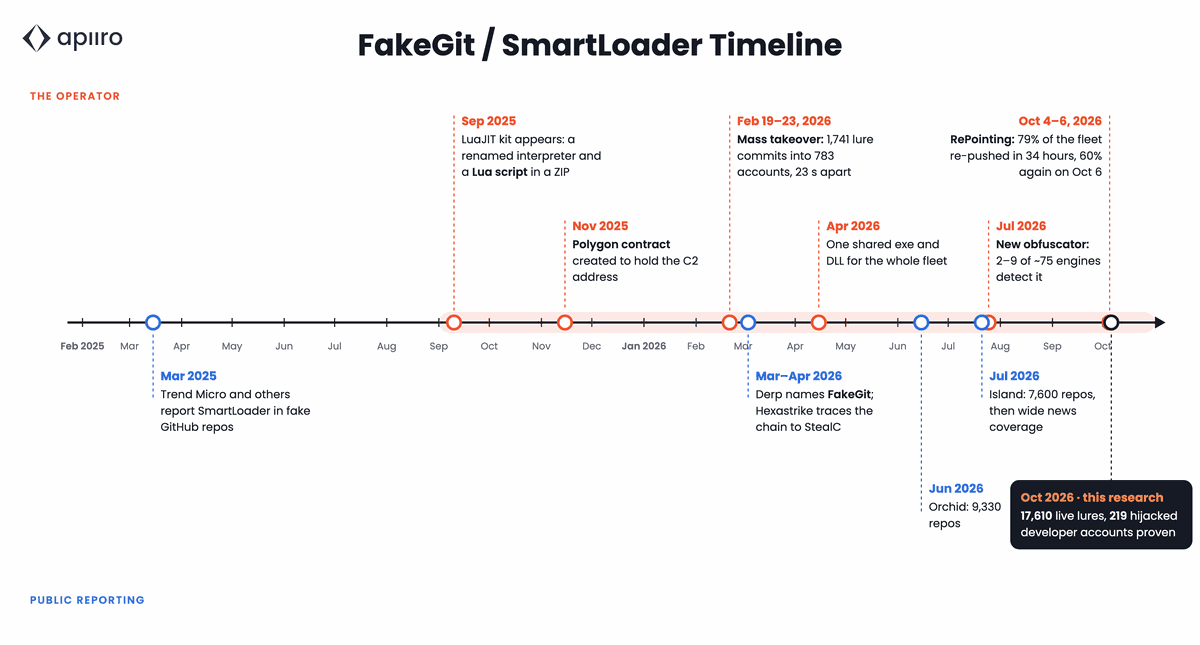
FakeGit returns: Security researchers have found 17,610 GitHub repositories that are infecting users with the SmartLoader malware. The repos had been available on GitHub for months but were updated at the start of October to point their download buttons to malicious versions. The attackers exploited a technique called RePointing, where they delete a file from the repo and point its download to an older malicious copy while keeping the current one clean. [Apiiro]
Tensorlake supply chain attack: The Shai Hulud worm is back, this time with a supply chain attack originating from the Tensorlake npm package. [Aikido Security // Endor Labs // GMO Flatt Security // SafeDep // Socket Security // Sonatype // Step Security]
RubyGems malware: Security researchers have also spotted a cluster of 42 malicious Ruby libraries on RubyGems that target the crypto and web3 community. [OpenSourceMalware // SafeDep]
Warlock targets critical infrastructure: A Chinese threat actor (Longlegs) is targeting Microsoft SharePoint servers installed at critical infrastructure companies and deploying the Warlock ransomware. [Polyswarm]
Malicious Firefox add-ons: Socket researchers have spotted a new cluster of malicious Firefox add-ons that are targeting cryptocurrency users for data exfiltration. [Socket Security]
Adception campaign: Threat actors are using Google and Bing poisoned search results to infect users seeking AI tools with malware. [Push Security]
SRG leak: An unidentified threat actor has leaked the internal chats of the Silent Ransom Group, a well known data extortion group known to target US law firms. The leaked chats cover thousands of messages sent between members from August 2025 to September this year. The messages expose plots to send individuals to install malware at law firms, kidnap executives, and even spy on military objectives like submarine bases. According to DataBreaches.net, the files appear to have been taken from a misconfigured MongoDB database. Blockchain analysis firm Chainalysis confirmed the authenticity of the leaks through the transactions mentioned in past messages. [Chainalysis // Crystal Intelligence // DataBreaches.net // The Record]
Hikvision attacks in Ukraine: Security firm GreyNoise has recorded a spike in exploitation attempts targeting Hikvision DVRs across Ukraine between 21 September and 1 October 2026. [GreyNoise]
Langflow attacks: F5 looks at all the exploitation attempts hitting Lanflow AI servers these days and the main vulnerabilities they are exploiting. [F5]
Malware technical reports
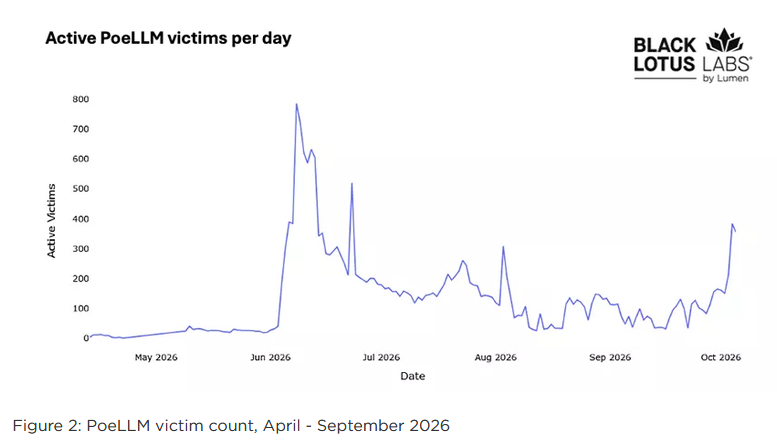
PoeLLM: Lumen's Black Lotus Labs security team has detected a new malware campaign that uses a poem hosted on GitHub as a command-and-control system. The malware targets exposed AI/LLM and open-source services such as LiteLLM, Ollama, Gotenberg, and Gitea. The campaign compromised at least 3,400 servers and appears to be financially motivated. [Black Lotus Labs]
Nyx macOS botnet: Gen Digital researchers have spotted a rare botnet targeting macOS devices. This one's coded in Go and comes with stealer, DDoS, and mass-scanning features. [Gen Digital]
Midnight Mimosa: Bitdefender has found malware in the firmware of some low-cost Android smartphones built on MediaTek hardware. The Midnight Mimosa malware can run code on the device, install other apps, and carry out ad and click fraud. Most of the infected devices are forgeries of more well-known phone brands. [Bitdefender]
AI-analysis evasion in malware: Cisco Talos looks at the rising trend of anti-AI analysis and evasion techniques used in malware strains these days, as a way to prevent AI tools from analyzing payloads. Talos researchers say this is still in its "early" phase. [Cisco Talos]
P7 DarkSword: Security researchers have discovered a new variant of the DarkSword iOS exploitation kit in the wild. This one seems to have received updates from all the other stock variants seen until now. [iVerify // Censys]
"Compared with the variants we usually observe, P7 reduces its on-device footprint, adds on-device keychain and crypto-wallet theft, and adds two way C2 communication with the attacker's infrastructure."
ClingSTUN Linux backdoor: Fortinet has discovered a new Linux backdoor installed on unpatched internet-facing servers and devices. Named ClingSTUN, the backdoor works as a back-connect proxy to let attackers connect to infected systems. It also abuses STUN (Session Traversal Utilities for NAT) systems as a C2. [Fortinet]
AVERAT: Rapid7 has spotted new BPFDoor versions in a campaign delivering the AVERAT against South Korean targets. [Rapid7]
LxBase RAT: Russian security firm has discovered a new RAT named LxBase that is being sold via a MaaS model and already used in attacks against Russian orgs. [BI.ZONE]
MALFEX npm malware: Researchers have found a new malware strain distributed via npm libraries. The malware is being used to deploy infostealers and RATs on infected hosts. The threat actor behind the new MALFEX malware appears to have been active on npm since at least 2023. [Checkmarx]
CastleStealer: Flashpoint says CastleStealer has been updated to bypass the new app-bound encryption in Chromium-based browsers and dump stored cookies and credentials. [Flashpoint]
Warden Stealer: Gen's Avast team looks at the rise of Warden Stealer, a new Rust-based infostealer that has a peculiar focus on stealing AI-related credentials. It also comes with its own loader and a built-in cryptocurrency clipper. [Gen Digital]
IronChain ransomware: ANY.RUN says the IronChain ransomware can sometimes mess up its encryption and permanently destroy a victim's files. [ANY.RUN]
Sponsor section
In this sponsored product demo, Prowler founder and CEO Toni de la Fuente walks Risky Business host Patrick Gray through the company's open-source cloud security platform. Toni demonstrates how Prowler can identify and remediate security issues across AWS, Azure, GCP, and Kubernetes. There's a pointy-clicky GUI interface and a CLI, and both come in handy in different ways. The Prowler platform is completely free and open source, but there is a hosted version you can pay for if you don't want to run it yourself.
APTs, cyber-espionage, and info-ops
AI and info ops: The Center for Emerging Technology and Security warns that AI has evolved from supporting disinformation and influence operations to running campaigns on its own. CETaS warns that social media platforms don't have the defenses to counter or detect most of these operations. [CETaS]
UAT-11985: A suspected Chinese APT group is targeting Taiwanese organizations using an AI-assisted AitM phishing kit. [Cisco Talos]
Spyware campaign targets Moldovan media and civil society: Members of Moldovan media and civil society have been targeted with malware in a spear-phishing campaign in early September. [ResidentNGO]
Partisan Zmiy (Cyber Partisans): Rostelecom says Belarusian hacktivist group Cyber Partisans breached and stayed hidden in a Russian healthcare organization for two years in what appears to be a classic espionage operation. The group later confirmed it was the Moscow Department of Health. [Rostelecom // Cyber Partisans]
UAC-0277 deploys LUNEXSTEALER: A suspected Russian group has hacked more than 100 Ukrainian sites to host ClickFix lures that deploy the LUNEXSTEALER on visitors' devices. [CERT-UA]
UAC-0099’s MATCHBOIL: ESET looks at MATCHBOIL, a C# downloader used by Russia-aligned APT group UAC-0099 to download, install, and persist across infected hosts. [ESET]
OpenAI disrupts disinfo ops: OpenAI has disrupted Russian and Iranian influence operations that used ChatGPT to spread disinformation and political propaganda. The Russian operation used ChatGPT to pose as a research center in Latin America and recruit legitimate academics for projects criticizing Ukraine. The Iranian operation used ChatGPT to write articles about the Iran-US war and pitch them to legitimate news outlets. [OpenAI]
CL-STA-1178: An Iranian state-aligned threat actor has been masquerading as the Dubai Airports IT department to deliver trojanized coding challenges to high-value targets. The campaign targeted Iraqi IT experts looking for new jobs and allowed the Iranian group to infect them with malware and access their current employers' networks. [Palo Alto Networks]
Iranian APT hacks Iraqi regional government: Iranian hacking group DarkBlinders has compromised a government cloud environment in Iraq's Kurdistan region. [Dream]
VPN-over-DNS data exfiltration event: The DomainTools security team says it detected a massive spike in DNS activity coming out of Iran a day after the US and Israel started a bombing campaign. The company believes the spike is a possible mass VPN-over-DNS data exfiltration event. [DomainTools]
"For a moment, let’s humor some very thin speculation: To me, this largely looked like a very voluminous emergency offsite backup. And given the volume, it did not look like opposition or civilian activity. The technical indicators pointed circumstantially to Iranian regime activity. Due to the complexity of simulations, nuclear program data in particular can be highly, highly storage-intense. So we made a strategic decision to attempt no decryption, because Iranian nuclear program data is the last thing I want in my possession, even sandboxed. But to reiterate, this is and must remain speculation."
Dropping Elephant: Indian-linked APT Dropping Elephant (Patchwork, APT-C-09) has been going after organizations in the government, defense, and naval sectors across Southeast Asia. [Arctic Wolf]
Kimsuky's Operation GitPower targets Ukraine: North Korean APT group Kimsuky is targeting Ukrainian experts in diplomacy, security, and international policy with targeted spear-phishing operations. [Genians]
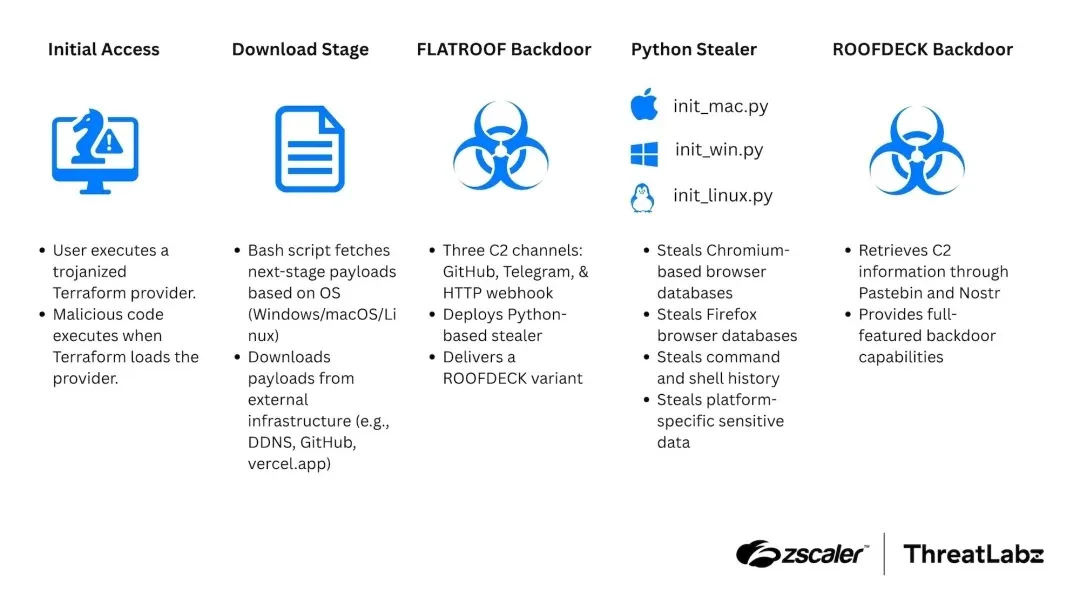
TraderTraitor abuses Terraform: Zscaler has attributed recent incidents involving malicious Terraform image providers to North Korean APT group TraderTraitor. [Zscaler]
New Flax Typhoon seizures: US authorities have seized seven domains used for Chinese hacking operations. The domains were owned by Chinese IT firm Integrity Technology Group, a cyber contractor for the Chinese government. The domains hosted command and control servers for vulnerability scanning and phishing operations. The company's infrastructure has been previously linked to a cyber espionage group tracked as Flax Typhoon. Cybersecurity agencies from Five Eyes countries have also published security advisories on the group's activities. [DOJ // NSA // CISA // UK NCSC // ASD // NZ NCSC]
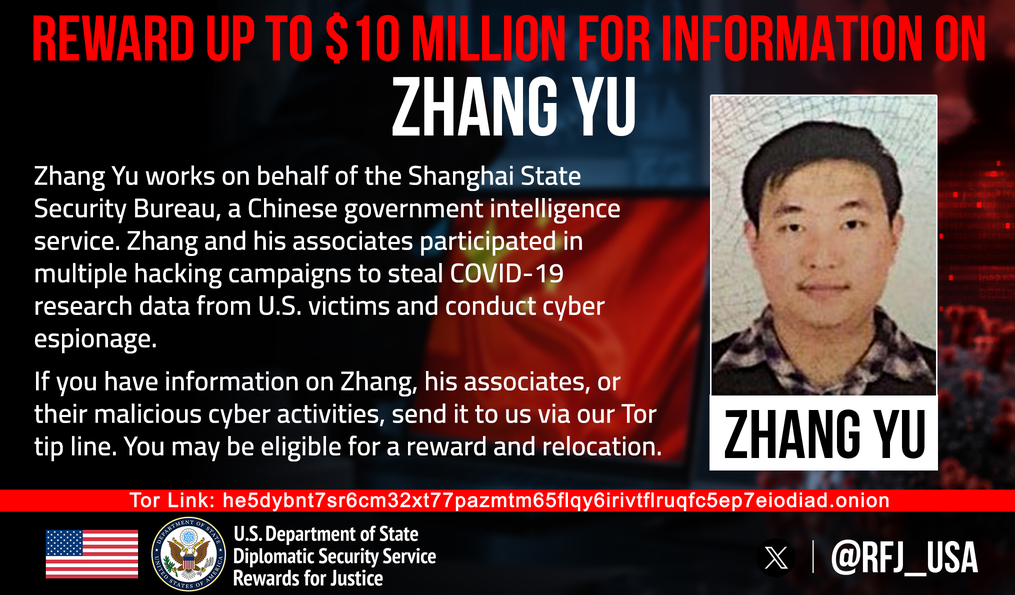
New Hafnium reward: The US is offering a $10 million reward for information on a member of Chinese cyber-espionage group Hafnium. The DOJ charged Zhang Yu in April this year with hacking and stealing information on COVID vaccines from US organizations. He was indicted together with another Chinese national named Xu Zewei. Xu was arrested and extradited from Italy earlier this year. [Rewards for Justice]
Vulnerabilities, security research, and bug bounty
Security updates: Android, Arista Networks, Atlassian, Chrome, Cisco, Citrix, Dell, Elastic,FortiMail, GitLab, HashiCorp, JetBrains, MongoDB, Qualcomm, SmarterMail, SonicWall, Splunk, Veeam, wolfSSH.
FortiMail zero-day: Fortinet has released patches for a new zero-day in its FortiMail product, tracked as CVE-2026-104286. [Fortinet]
Another Citrix zero-day: And speaking of zero-days, Citrix also patched another one in ADC and NetScaler devices last weekend as well. [Citrix blog // Citrix CVE-2026-88779]
Atlassian zero-day: Atlassian has released security updates to patch an actively exploited zero-day. The zero-day impacts the company's Data Center, a software suite for self-hosting Atlassian products, such as Confluence, Jira, Bitbucket, and others. All Data Center versions are affected. The zero-day allows attackers to access specific files within the web application root directory. [Atlassian CVE-2026-21589]
AhsayCBS zero-days: Threat actors are exploiting two zero-days in AhsayCBS cloud backup servers. The attacks are targeting the Ahsay management console through which admins control the backup systems. The zero-days are chained together to bypass authentication and run code on the console system. Security firm Huntress discovered the attacks last week. Patches are not available. [Huntress]
Google suspends OSS VRP due to AI spam: Google has paused new submissions to its Open Source Software Vulnerability Rewards Program (OSS VRP). The program has been flooded with AI-generated bug reports, most of which are invalid. Google said it will review the program again in the first quarter of next year. [Google]
AgentCorruption vulnerability: Zenity researchers have published details on AgentCorruption, a technique that uses a single prompt to an AI agent to hijack a company's Amazon Bedrock AgentCore server. [Zenity]
Project Lightwell finds 400 Java bugs: IBM and Red Hat have found, reported, and patched more than 400 vulnerabilities in popular Java libraries. The bugs were patched as part of IBM's Project Lightwell, announced in May. IBM says the project is now generally available. Paying customers will be able to request priority security reviews of specific open-source projects. [IBM // CybersecurityDive]
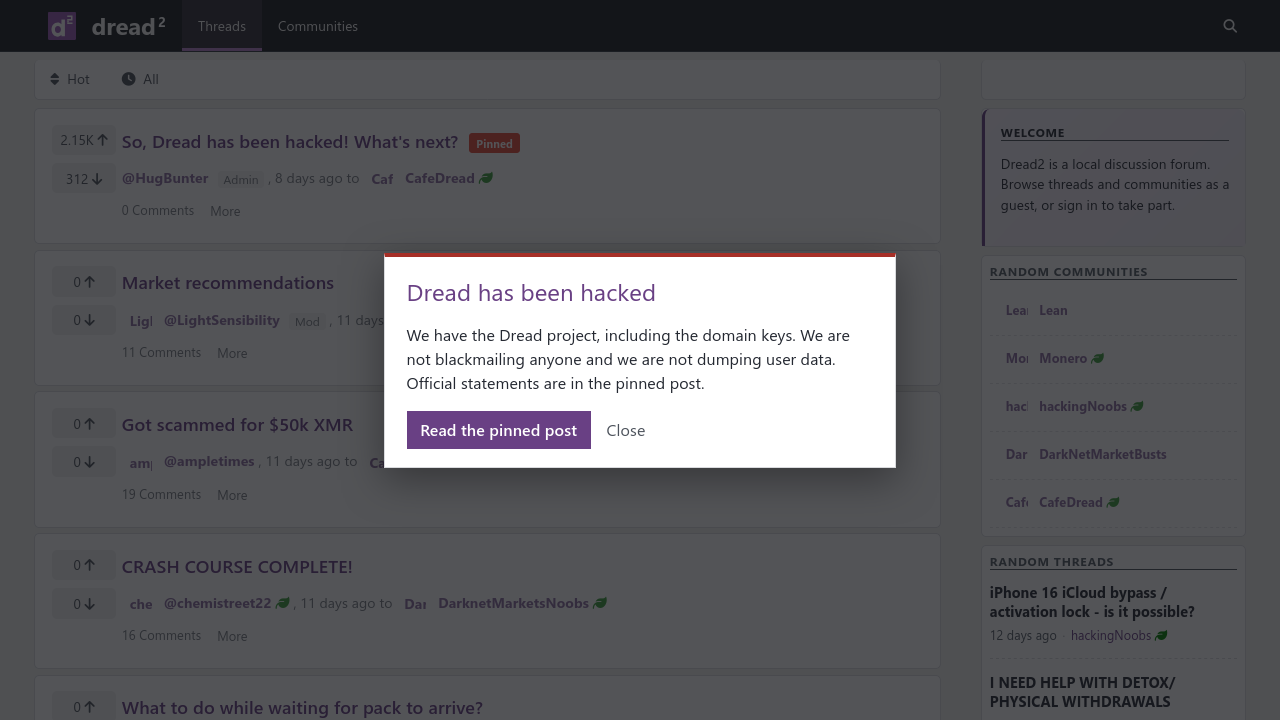
GoBalance bug exposes onion private keys: A vulnerability in the GoBalance load balancer can allow hackers to retrieve the private keys of Onion dark web services. The vulnerability was allegedly used to hack Dread, a Reddit-like community on the dark web. GoBalance is a widely used tool by dark web services to mitigate DDoS attacks. [Searchlight Cyber]
Infosec industry
Threat/trend reports: BlackFog, Check Point, ConsumerReports, GuidePoint Security, HackerOne, IDC, Okta, Palo Alto Network, PwC, Report Fraud UK, and Sonatype have recently published reports and summaries covering various emerging threats and industry trends.
RIP Darren Martyn: LulzSec member and security researcher Darren "pwnsauce" Martyn has passed away. [RIP.ie] [h/t RealHackHistory]
https://bsky.app/profile/bsky.realhackhistory.org/post/3mxe77s6jpc23
New tool—OSS Scanner: Anthropic has launched OSS Scanner, a Claude-based opt-in vulnerability scanner for the open-source ecosystem.
BSides Tallin 2026 videos: Talks from the BSides Tallin 2026 security conference, which took place in September, are now available on YouTube.
m0leCon 2026 videos: Talks from the m0leCon 2026 security conference, which took place in March, are available on YouTube.
Risky Business podcasts
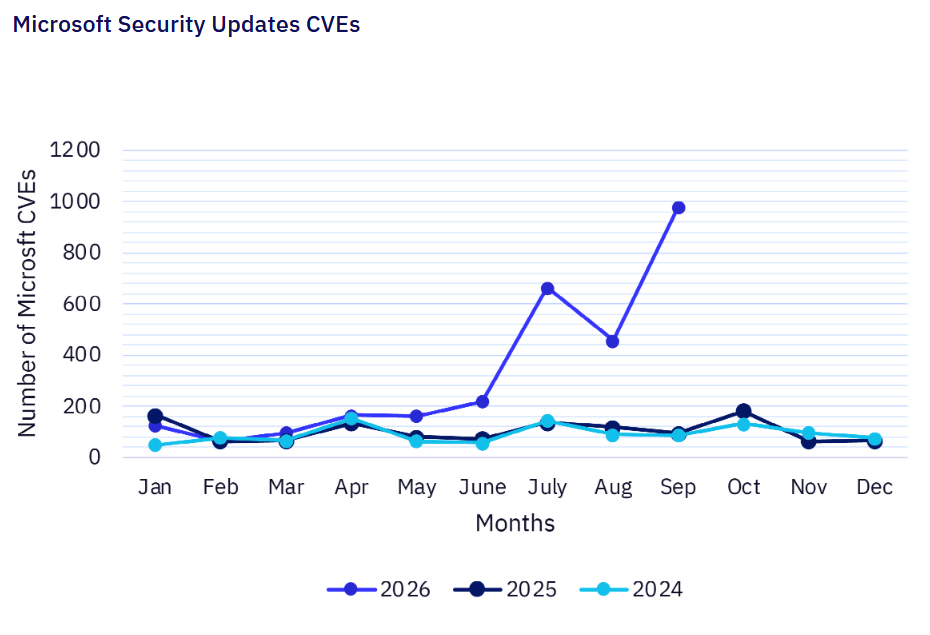
In this episode of Risky Business Features, James Wilson explains why “number of bugs” fixed in any given update is a misleading metric. We’ve seen up to 1,000 individual bug fixes in a single update recently, but that doesn’t give defenders the full picture they need to manage risks.